


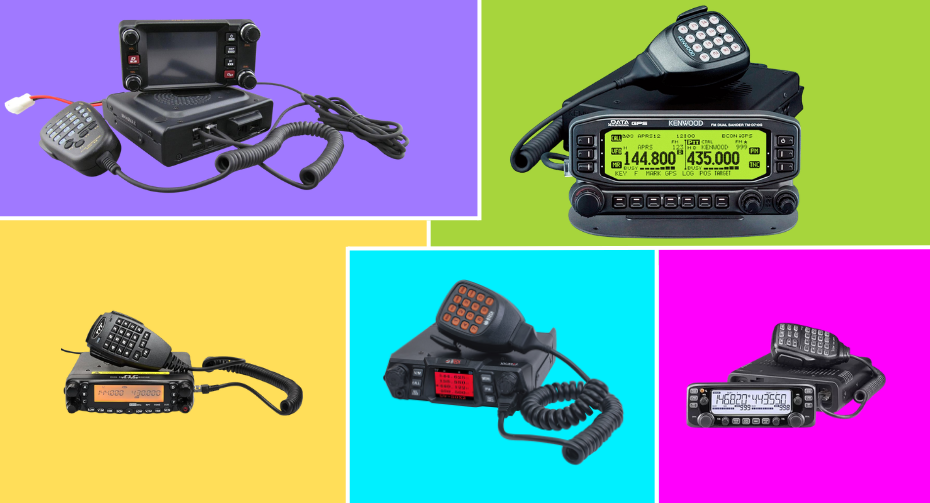
There is a particular kind of quiet that settles over a highway when your phone shows “No Service.” Maybe you are driving through the Cascades, or a canyon in West Texas, or a stretch of county road after a storm knocked out the nearest tower. That silence is exactly why dual-band mobile ham radios have quietly become one of the most practical pieces of gear a driver, prepper, off-roader, or volunteer responder can own.
A dual-band mobile ham radio is no longer a novelty item from a hobbyist catalog. It is a communication tool that works when cellular networks do not, and in an era where cell towers get overloaded during wildfires, hurricanes, and mass-casualty events, that distinction matters more every year. This guide breaks down the seven concrete benefits of running a dual-band mobile ham radio in your vehicle, explains the technology behind why it works, and looks at where the hardware stands right now, not five years ago.
What “Dual-Band” Actually Means (And Why It is Not Just Marketing)
Before getting into the benefits, it helps to know what is under the hood. A dual-band mobile ham radio transmits and receives on two separate amateur frequency ranges, almost always 2 meters (144 to 148 MHz, VHF) and 70 centimeters (420 to 450 MHz, UHF). VHF signals travel farther over open, flat terrain and water. UHF handles obstructions like buildings, trees, and hilly terrain better because the shorter wavelength diffracts around obstacles more efficiently.
Put those two bands in one radio, and you get a device that adapts to whatever environment you are driving through, instead of locking you into one propagation style. That flexibility is the foundation for almost everything else on this list.
1. Genuine Long-Distance Range Without Extra Hardware
A single-band handheld or CB radio gives you a few miles on a good day, less in hilly terrain. A dual-band mobile unit, properly installed with a roof-mounted or trunk-lip antenna and running 25–50 watts, regularly reaches local repeaters 20 to 40 miles away, and repeater-to-repeater linking systems can extend that conversation across an entire state.
This is not a theoretical number pulled from a spec sheet. Mobile installs benefit from three things a handheld cannot match: higher wattage, a proper full-size antenna instead of a stubby rubber duck, and elevation from the vehicle roofline. Put those together, and the practical range difference between a $50 handheld and a 50-watt dual-band mobile ham radio is not incremental. It is the difference between “I can talk to my buddy in the next parking lot” and “I can hit a repeater on the far side of the mountain range.”
For anyone who spends real time outside cell coverage, including ranchers, overlanders, long-haul commuters through rural stretches, and hunters, that range is the entire point of owning a dual-band mobile ham radio in the first place.
2. A Communication Layer That Does Not Depend on Cell Towers
This is the benefit that gets people to buy their first dual-band mobile ham radio, and it is not exaggerated. Cellular networks are a single point of failure. They rely on centralized towers, backhaul fiber, and power grids, all of which go down together during hurricanes, wildfires, earthquakes, and ice storms, precisely the moments you need to reach someone.
Amateur radio operates independently of that infrastructure. Two dual-band radios can talk to each other directly, simplex, with zero towers involved, and even when towers are gone, a solar- or battery-powered repeater on a hilltop can keep an entire region in contact. That is why amateur radio operators are formally integrated into disaster response through organizations like ARES (Amateur Radio Emergency Service) and RACES (Radio Amateur Civil Emergency Service), both of which coordinate with FEMA and local emergency management during major incidents.
During Hurricane Helene’s aftermath in 2024, and again during the 2025 wildfire seasons in California and the Pacific Northwest, ham operators running dual-band mobile ham radios were among the first to relay welfare checks and supply requests out of areas where cell and landline service had been wiped out for days. That is not a hypothetical use case. It is a documented, recurring reality every storm season.
3. Access to an Entire Network of Repeaters (Not Just Your Own Signal)
A repeater is a fixed station, usually mounted high on a tower, hill, or building, that receives a signal on one frequency and instantly rebroadcasts it on another, at much higher power and elevation than any mobile radio can manage alone. A dual-band radio’s whole value proposition depends on this network, because it is built to work with the specific input/output frequency pairs and CTCSS/DCS tone codes that most repeater systems use.
There are tens of thousands of active repeaters across North America, catalogued on sites like RepeaterBook, many of them linked together through systems like DMR’s BrandMeister network or Yaesu’s Wires-X, meaning your voice can travel from a repeater in one state to a linked repeater hundreds of miles away, and then to another, and another. A driver with a properly programmed dual-band mobile ham radio is not limited to the range of their own transmitter. They are tapping into a distributed, community-maintained infrastructure that already spans the country.
4. Dual-Watch and Dual-Receive: Monitoring Two Conversations at Once
This is one of the more underrated features on modern dual-band mobiles, and it is exactly what it sounds like: the radio can monitor two frequencies simultaneously, so you can keep an ear on a local emergency or weather net while staying active on your regular repeater or simplex channel.
In practice, this means a driver can leave one VFO parked on a NOAA weather frequency or an active ARES net during severe weather, and the other on a local repeater for normal chatter, switching attention only when something on the monitored channel actually matters. It is a small design detail, but it is the kind of thing that turns a radio from “a device you talk into” to “a device that is quietly watching your back.”
5. Built-In Access to Weather Alerts and Public Safety Interoperability
Modern dual-band mobile ham radios increasingly ship with NOAA Weather Radio reception and SAME (Specific Area Message Encoding) alerting, meaning the radio can automatically interrupt whatever you are listening to when the National Weather Service issues a warning for your specific county, not a broad regional alert, but one filtered to your exact location.
Combine that with the ability to program in local fire, EMS, and public-safety mutual-aid frequencies for monitoring (receive-only, in most cases, since transmitting on those bands requires separate licensing), and a dual-band mobile becomes a genuine situational-awareness tool during severe weather season, not just a chat device. For anyone who drives through Tornado Alley, hurricane corridors, or wildfire-prone terrain, that automatic interrupt feature has real, practical safety value.
6. Digital Modes Bring GPS Tracking, Texting, and Sharper Audio
The last few years have pushed dual-band mobiles well past analog FM. Two digital standards now dominate the market, and it is worth understanding both before buying:
- C4FM (System Fusion), Yaesu’s digital voice standard, delivers cleaner audio at the edge of range and supports GPS position data riding alongside voice, plus limited text messaging between compatible radios.
- DMR (Digital Mobile Radio), a Tier II open standard, uses time-slot technology to fit two simultaneous conversations into the bandwidth one analog channel would normally use, and connects to massive linked networks like BrandMeister that span continents.
Radios like the Yaesu 400XDR pair C4FM digital voice with a touchscreen interface and built-in APRS (Automatic Packet Reporting System), which broadcasts your GPS location to a public network that other operators, and even public web trackers, can see in real time. That is genuinely useful for a solo off-roader who wants a location trail visible to family, or for event organizers tracking support vehicles along a race route. Kenwood’s TM-D710G and the newer TH-D75 handheld line built a reputation specifically on strong APRS integration, and Icom’s IC-2730A remains a favorite for operators who want straightforward dual-band FM without the added complexity of digital modes.
None of this is required to get value from a dual-band mobile ham radio, since plenty of operators run analog-only for decades and never miss the digital layer. But if GPS tracking, cleaner long-range audio, or text-based check-ins matter to your use case, the current generation of hardware supports all three natively.
7. Long-Term Value: One Radio Instead of Two, One License Instead of a Subscription
A single-band radio locks you into one part of the spectrum. A dual-band mobile covers both VHF and UHF in one chassis, which means no buying, mounting, and wiring two separate radios to get equivalent coverage. Over a five-year ownership window, that is real money saved on hardware, antennas, coax, and install labor.
There is also no recurring subscription fee, unlike satellite messengers or certain GMRS repeater services. Once you hold an FCC Technician-class amateur license, a test that covers basic regulations, operating practices, and electronics theory, and costs under $50 in most cases, you can legally operate a dual-band mobile ham radio on the 2m and 70cm bands indefinitely, with no monthly charge for airtime. For a family that wants dependable off-grid communication for road trips, hunting camps, or storm season, that one-time cost structure compares favorably against ongoing satellite communicator plans.
The Current State of Dual-Band Mobile Hardware
The category has genuinely moved forward in the last few years, and it is worth knowing where the market actually sits before shopping.
Our team at DigitalCrunch spends a fair amount of time bench-testing mobile transceivers for exactly this kind of buying guide, and a few patterns hold up consistently across current models:
- Yaesu 400XDR: A touchscreen dual-band mobile ham radio with C4FM digital voice and integrated APRS offers excellent versatility. Its dual-receive capability makes it a top choice for drivers needing digital and analogue support.
- Kenwood TM-D710G: the long-standing favorite dual-band mobile ham radio for APRS-focused operators, still widely recommended for its mature GPS packet implementation and dual-receive design.
- Icom IC-2730A: a simpler, analog-focused dual-band mobile ham radio that installs quickly and appeals to operators who want reliable FM performance without a digital learning curve.
- BTech UV-50X2: a budget-friendly dual-band mobile ham radio pushing up to 50 watts, popular with newer operators who want strong output power without the premium-brand price tag.
- TYT TH-7900 / TH-9800 series: quad-band and dual-band options aimed at operators who want a lower entry price and do not need brand-name APRS integration.
Across price tiers, the trend is the same: more digital mode support, brighter and larger displays, better GPS integration, and continued backward compatibility with the analog repeater network built up over decades. None of the older analog infrastructure is going away, since new digital radios are simply adding capability on top of it.
Things Worth Checking Before You Buy
A few practical notes that do not always make it into spec-sheet comparisons:
- Confirm your license class covers the bands you want to use. A Technician license covers the vast majority of 2m/70cm privileges most drivers need.
- Budget for the antenna and coax, not just the radio. A $300 radio with a cheap antenna may underperform a $150 radio. A quality NMO-mount antenna and low-loss coax can significantly improve performance.
- Check whether the radio supports the digital mode your local repeaters actually use. A C4FM-only radio will not talk digitally to a DMR-only repeater, and vice versa, so most areas lean toward one standard over the other.
- Factor in install time. Running power leads to the battery, mounting the antenna, and routing coax through a firewall typically takes two to four hours for someone comfortable with basic wiring.
Frequently Asked Questions
Do I need a license to use a dual-band mobile ham radio?
Yes. A Technician-class FCC license is required for legal amateur band transmissions, earned by passing a 35-question exam on rules, procedures, and radio theory. Listening (receiving) generally does not require a license, but transmitting does.
What is the real-world range of a dual-band mobile radio?
Simplex (radio-to-radio, no repeater) typically covers 5–15 miles depending on terrain and antenna height. Through a repeater, that same radio can often reach 30–50 miles or more, and linked repeater systems can extend a conversation across an entire region.
Is dual-band ham radio better than GMRS for emergency use?
They serve different needs. GMRS requires a simpler license (no test, just a fee) and is easier for family communication out of the box. Amateur dual-band radios usually provide higher power limits and wider repeater access. They also support digital modes and APRS tracking, unlike GMRS radios.
Can dual-band radios pick up NOAA weather alerts?
Many mobile models include NOAA Weather Radio with SAME alerts. Also, they provide county-specific warning tones when the National Weather Service issues alerts.
Do I need both VHF and UHF, or is one enough?
It depends on local repeater coverage, since some regions lean heavily on 2m repeaters while others favor 70cm. A dual-band mobile ham radio eliminates the guesswork by supporting both bands. You won’t need to research which frequency your area uses before buying.
Are digital modes like DMR and C4FM worth the extra cost over analog-only radios?
For most casual users, analog FM is more than sufficient and remains the most universally compatible option across the repeater network. Digital modes add value through GPS tracking and clearer audio over longer distances. They also provide access to nationwide linked talk groups. Still, they come with a steeper learning curve and are worth it mainly for operators who plan to use those specific features.
The Bottom Line
A dual-band mobile ham radio is not gear you buy and forget about in a glovebox. It is infrastructure, a genuine backup communication layer that keeps working when the towers do not, built on a repeater network that thousands of volunteer operators maintain specifically. Hence, it is there when it is needed. Whether the draw is emergency preparedness, off-grid road trips, storm season safety, or just the technical satisfaction of talking to someone forty miles away with no cellular network involved, today’s dual-band mobile ham radio hardware makes that more accessible and more capable than ever.
