


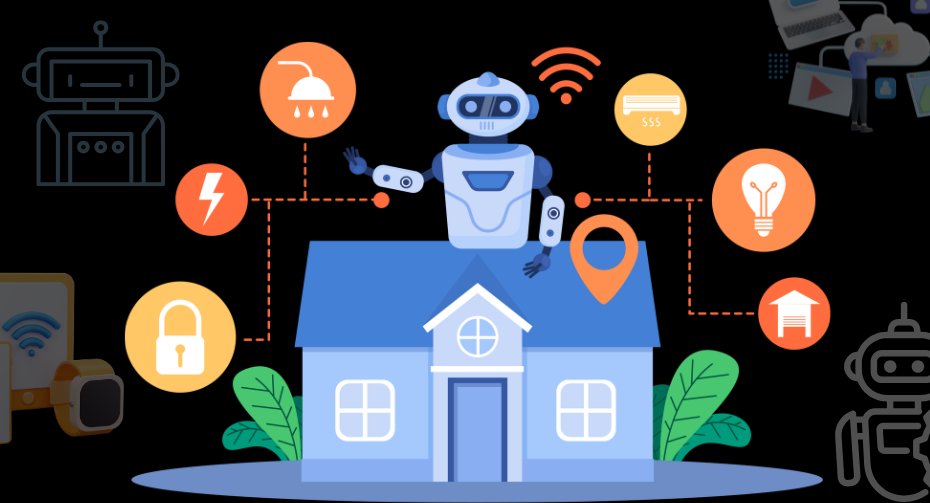
Your smart home is convenient. It’s also a target.
Every device you connect to your Wi-Fi (your thermostat, doorbell camera, smart TV, robot vacuum) is a potential entry point for a hacker. And most people don’t realize how vulnerable they are until something goes wrong.
By 2026, the average household runs over 20 connected devices. Smart fridges, AI-powered security cameras, voice assistants, connected baby monitors, EV chargers plugged into home networks. The ecosystem has exploded, and the attack surface has grown right along with it. Security researchers now flag IoT devices as the number one entry point for residential cyberattacks, overtaking phishing emails for the first time.
Some of those devices have default passwords that nobody ever changed. Others communicate data over completely unencrypted channels. The manufacturers shipped them, people plugged them in, and everyone assumed everything was fine.
It wasn’t.
This guide covers eight actionable, genuinely effective ways to harden your smart home against cyber threats. No fluff. No vague advice like “be careful online.” Just practical steps that actually work right now.
Why Smart Home Devices Are a Hacker’s Favorite Target
Before diving into the solutions, you need to understand the problem.
Traditional computers (your laptop, your phone) get regular security updates. They have antivirus software. People treat them with a degree of caution.
Smart home devices? Not so much.
A smart plug sitting behind your couch hasn’t been touched since you set it up two years ago. Its firmware is outdated. Its password is probably “admin123” or whatever the box came with. And it has been quietly sitting on your home network, day and night, with full access to everything else connected to it.
Hackers know this. They use AI-assisted scanning tools that sweep the internet looking for exposed devices at a scale that wasn’t possible even three years ago. When they find one with a known vulnerability, they’re in, sometimes within minutes. From there, they can spy on your home, steal your credentials, launch attacks on other networks, or hold your devices for ransom.
The threat is real. But it’s also very preventable.
Proven Ways to Protect Your Smart Home From Hackers
Let’s explore the most effective ways one by one:
1. Change Default Credentials Immediately, Every Single Time
This is the most important step on this list. It’s also the most ignored.
Every smart device ships with default login credentials. The username might be “admin.” The password might be “0000”, “password”, or the device’s serial number printed on the bottom. Manufacturers do this for convenience during setup. Hackers exploit it for convenience during attacks.
There are publicly available databases, some even maintained by security researchers, that list the default credentials for thousands of devices. A hacker doesn’t need to crack anything. They look up your device model and try the defaults. If you never changed them, they’re in.
Change every default password the moment you set up a device. Use a strong, unique password for each one. That means at least 16 characters, a mix of letters, numbers, and symbols, and nothing that connects to your real life. Don’t reuse passwords across devices.
A password manager makes this easy. Tools like Bitwarden, 1Password, or Dashlane generate and store complex passwords so you never have to remember them. There’s no excuse for not using one in 2026.
If the device forces you to keep a default username like “admin,” change what you can and make sure the password is bulletproof.
2. Set Up a Separate Network Just for Smart Home Devices
Here’s something most people don’t know: your router can run more than one Wi-Fi network at the same time.
Most modern routers support a guest network or a VLAN (Virtual Local Area Network). You can create a completely separate network specifically for your smart home devices, isolated from the network where your laptop, phone, and sensitive data live.
Why does this matter? Because if a hacker compromises your smart thermostat, they shouldn’t automatically gain access to your laptop and everything on it. Network segmentation stops lateral movement. It contains the damage.
Setting this up is simpler than it sounds. Log in to your router’s admin panel (usually by typing 192.168.1.1 or 192.168.0.1 into a browser). Look for guest network or VLAN settings. Create a new network with a strong password. Connect all your smart home devices to that network.
Your personal devices (computers, phones, tablets) stay on your main network. Your smart bulbs, cameras, speakers, and sensors go on the isolated one. Even if something on the IoT network gets breached, your personal data stays protected.
In 2026, many mesh router systems, such as Eero, Orbi, and Google Nest Wi-Fi Pro, make this even easier. They let you create dedicated IoT networks through a simple app in under five minutes. If your router supports it, there’s zero reason not to do this today.
Similarly, you can use a VPN router for smarter protection. Unlike a standard VPN app that protects only one device, a VPN router encrypts traffic for every connected smart home device, including security cameras, smart TVs, doorbells, and voice assistants. This adds an extra layer of privacy and helps prevent cybercriminals from intercepting sensitive data on your network. Many modern routers support VPN connections directly, while some users choose dedicated VPN routers for easier setup and whole-home protection.
This single step dramatically reduces your attack surface. It’s one of the highest-impact things you can do.
3. Keep Firmware and Software Updated Religiously
Software updates are boring. They interrupt things. They take time. Most people click “remind me later” and forget about them entirely.
Hackers count on that.
Firmware is the software that runs inside your smart devices. Manufacturers release updates to patch security vulnerabilities, holes that researchers or hackers have discovered. When a patch drops and you don’t install it, you’re essentially leaving a known, documented hole in your security wide open.
The Mirai botnet attack succeeded largely because millions of IoT devices were running outdated firmware with known vulnerabilities. That attack was years ago, and the pattern keeps repeating. New botnets in 2025 and 2026 have used the same playbook against newer, unpatched devices. Nothing changes when people don’t update.
Turn on automatic updates wherever possible. For devices that don’t offer automatic updates, set a calendar reminder to check for firmware updates every month. Go into each device’s app or settings panel and look for a firmware or software version number. Compare it against what the manufacturer lists as current on their website.
Also, update the apps that control your smart devices. A vulnerable app can expose your devices just as easily as vulnerable firmware.
And if a manufacturer stops releasing security updates for a device, meaning it’s reached “end of life,” take that seriously. An unsupported device is a liability. In a threat landscape that moves as fast as it does today, running end-of-life IoT hardware is not worth the risk. Replace it.
4. Enable Two-Factor Authentication on Every Account
Your smart home devices are managed through apps and accounts. These accounts are your Google Home, Ring, and SmartThings accounts. If a hacker gets access to any of these, they don’t need to hack your devices directly. They just log into your account and take control from there.
Passwords alone aren’t enough. Data breaches happen constantly. Credentials get stolen, leaked, and sold on the dark web. Your password might already be compromised without you knowing. In fact, by 2026, billions of credential pairs are circulating in breach databases, and automated tools test them against popular platforms around the clock.
Two-factor authentication (2FA) adds a second verification step. Even if a hacker has your password, they still need access to your phone or authenticator app to get in. It turns a stolen password into a dead end.
Enable 2FA on every account connected to your smart home ecosystem. Use an authenticator app like Google Authenticator, Authy, or Microsoft Authenticator rather than SMS codes. SMS-based 2FA is better than nothing, but it’s vulnerable to SIM-swapping attacks where hackers trick your carrier into transferring your number to their device.
An authenticator app generates time-sensitive codes that only exist on your physical device. Much harder to steal.
Go through every app on your phone related to your smart home right now. Check the security settings. If 2FA is available and you haven’t enabled it, do it today.
5. Audit Your Network and Know What’s Connected
Most people have no idea how many devices are on their home network.
Take a guess. Now double it. You’re probably still under.
Smart TVs, streaming sticks, gaming consoles, printers, smart speakers, baby monitors, security cameras, smart appliances, AI home hubs, connected EV chargers. It adds up fast. And every device you’ve forgotten about is a device you haven’t secured.
Run a network audit. Tools like Fing (free, available on iOS and Android) scan your network and show you every connected device, including the manufacturer and device type. Most modern routers also display a list of connected devices in their admin panel. Some, like Eero and Orbi, show this information directly in their companion apps.
Look at the results carefully. Do you recognize everything? Is there anything that shouldn’t be there?
Any device you no longer use should be removed from the network entirely. An old smart plug gathering dust is still an active security risk as long as it’s connected. Disconnect it, reset it to factory settings, and dispose of it properly.
While you’re at it, check which devices have been granted permissions in your smart home apps. Revoke access for anything you no longer use. Reduce your attack surface everywhere you can.
6. Disable Features You Don’t Use, Especially Remote Access
Smart home devices come loaded with features. Universal Plug and Play (UPnP). Remote access. Voice activation. Cloud sync. Automatic device discovery.
Most people use maybe a third of these features. The rest sit enabled, waiting.
Every enabled feature that you don’t actively use is an unnecessary risk. UPnP, for example, automatically opens ports on your router to allow devices to communicate with each other and the internet. It’s convenient. It’s also a well-documented security weakness that attackers exploit regularly. In 2026, UPnP exploitation remains one of the most common techniques used in home network attacks, despite being a problem the industry has known about for over a decade.
Go into your router settings and disable UPnP unless you have a specific reason to need it. Disable remote access on cameras and other devices unless you genuinely need to access them from outside your home. If you do need remote access, use a VPN rather than exposing devices directly to the internet.
On individual devices, look for settings like “remote management,” “cloud access,” or “external access.” If you don’t need it, turn it off. Each feature you disable is one fewer door that a hacker can try.
Also consider disabling microphone access on smart devices that don’t need it. Voice-activated devices are always listening; that’s how they work. But if your smart TV doesn’t need voice control, turn off the microphone. There’s no reason to stream ambient audio from your living room to a remote server.
7. Use a Strong, Modern Router and Lock It Down
Your router is the gateway between your home and the internet. It’s the single most important device in your home network. And most people treat it like furniture, setting it up once and ignoring it forever.
If your router is more than four or five years old, replace it. Older routers often lack support for modern security protocols, stop receiving firmware updates, and may have known vulnerabilities that will never be patched. A modern router with active support is a foundational investment in your home’s security.
In 2026, Wi-Fi 7 routers are now widely available at accessible price points. Beyond the speed improvements, they offer stronger built-in security features, better network segmentation tools, and longer manufacturer support windows. It’s a worthwhile upgrade if you’re still running older hardware.
When setting up or reviewing your router, work through these steps:
Change the default admin credentials. The login panel for your router has its own username and password, separate from your Wi-Fi password. Change both. Use a strong, unique combination.
Use WPA3 encryption. WPA3 is the current standard for Wi-Fi security. If your router supports it, use it. If it only supports WPA2, that’s acceptable, but consider upgrading. Never use WPA or WEP, as these are dangerously outdated.
Disable WPS (Wi-Fi Protected Setup). WPS is a shortcut for connecting devices that have a well-known security vulnerability. Turn it off.
Disable remote management. Unless you’re an IT professional who needs to manage your router from outside your home, there’s no reason to leave this on.
Check your DNS settings. Consider switching to a privacy-focused DNS provider like Cloudflare (1.1.1.1) or Quad9 (9.9.9.9), which can block known malicious domains before your devices even connect to them.
A properly configured router does a huge amount of heavy lifting for your home’s security.
8. Monitor Your Network for Suspicious Activity
Security isn’t a one-time setup. It’s an ongoing process.
Even after taking every precaution, things can still go wrong. Devices can get compromised through a zero-day vulnerability, meaning a flaw that hasn’t been publicly discovered yet. A family member might connect an insecure device without thinking. A manufacturer might quietly push a problematic update.
Active monitoring helps you catch problems before they become disasters.
Several tools make this accessible for regular users. Firewalla is a small hardware device that plugs into your router and monitors all network traffic in real time. It alerts you to unusual activity: a device suddenly sending large amounts of data, a device connecting to suspicious IP addresses, or a new device appearing on your network. It’s user-friendly and doesn’t require a technical background to operate. The 2025 and 2026 versions now include AI-assisted anomaly detection that gets smarter the longer it runs on your network.
Pi-hole is a free, open-source solution for technically inclined users. It runs on a Raspberry Pi and acts as a network-wide ad and tracker blocker, but it also logs DNS queries so you can see exactly what your devices are communicating with.
At a minimum, check your router’s traffic logs periodically. Look for devices sending unusual amounts of data at odd hours. If your smart TV is transferring gigabytes of data at 3 AM when nobody is home, that’s worth investigating.
Also, monitor for new devices appearing on your network unexpectedly. If something you don’t recognize shows up, investigate it immediately. It could be a neighbor accidentally connecting to your network, or something more serious.
The Bigger Picture: Security Is a Habit, Not a Checkbox
None of these steps is difficult. But they do require intention.
The reason smart home devices get hacked isn’t that the defenses are impossible. It’s that convenience wins over caution. People set things up, enjoy the automation, and never think about the security layer underneath.
Hackers exploit that gap. Every day. And with AI-driven attack tools becoming cheaper and more accessible through 2025 and into 2026, the speed and scale of automated exploitation have grown faster than most people realize.
Building a secure smart home means treating security as something you maintain, not something you set up once. It means staying informed about vulnerabilities, replacing outdated devices, checking in on your network periodically, and never assuming “it probably won’t happen to me.”
It can. And when it does, the consequences range from annoying to genuinely dangerous, from hijacked cameras streaming your home to the internet to attackers gaining a foothold in your financial accounts.
The eight steps in this guide won’t make you invincible. Nothing does. But they will make you a much harder target than the millions of people still running their original default passwords on outdated firmware.
That’s the goal. Not perfection. Just significantly better than average.
Frequently Asked Questions
Can a hacker really get into my home through a smart bulb?
Yes, in certain scenarios. Smart bulbs run firmware and communicate over your home network. Researchers have demonstrated attacks where a compromised bulb was used as a foothold to access the broader network. The risk is real, though the effort required means you’re more likely to be targeted if attackers are specifically interested in you or using automated mass-scanning tools. Network segmentation (Tip 2) significantly reduces this risk.
How do I know if my smart home device has already been hacked?
Warning signs include devices behaving erratically or outside their normal schedules, unusual increases in data usage, settings changing without your input, devices becoming slow or unresponsive, and unfamiliar devices appearing on your network. Network monitoring tools like Firewalla can help detect these anomalies automatically.
Is it safe to use voice assistants like Alexa or Google Home in 2026?
They carry some inherent privacy trade-offs. They’re always listening for wake words, and that audio is processed on remote servers. If you use them, keep their software updated, regularly review your voice history in the associated apps, and consider turning off the microphone during sensitive conversations. For devices in bedrooms or home offices, many people now use the physical mute button by default and only activate voice features when needed.
How often should I change my Wi-Fi password?
There’s no strict rule, but changing it once a year is a reasonable habit. You should also change it immediately if you suspect a breach, if a guest you’re no longer comfortable with has the password, or after any significant security incident. Make sure it’s at least 16 characters and not based on any personal information.
What’s the single most impactful thing I can do right now?
Change every default password on every device in your home. If you only do one thing from this list, do that. It eliminates the single most commonly exploited vulnerability in home networks and takes less than an hour to complete.
Do smart home security systems make my house safer or create more risk?
Both, if you’re not careful. A well-configured smart security system with strong passwords, 2FA, and updated firmware adds meaningful protection. A poorly secured one, running default credentials and outdated software, can be disabled or hijacked by an attacker before they even reach your door. Security devices need the same hardening as every other smart device in your home.
Should I buy smart home devices only from major brands?
Reputable brands with established security track records are generally safer because they have more resources for security research and tend to support their devices longer. In 2026, look for devices that carry Matter certification, an interoperability standard that also enforces baseline security requirements. It’s not a guarantee of perfection, but it sets a meaningful floor.
Final Words
Hackers don’t target smart homes because they’re sophisticated. They target them because most people never bother with the basics. Change the defaults, segment your network, stay up to date, and you’ve already done more than the vast majority of homeowners ever will. That gap is your protection.
Your smart home is supposed to work for you. Keep it that way. A few hours of setup today buys you years of confidence that no one uninvited is watching your cameras, listening through your devices, or using your network as a launchpad for something worse. The effort is small. The payoff is real.
