

We have all heard the saying, “A picture is worth a thousand words,” and the internet has proven just how true it is. Yes, the use of graphics, images, and videos have grown rapidly across social media, blogs, news websites, and video platforms. Visual content has become a powerful way to capture attention, simplify information, and keep audiences engaged.
According to a recent report by Business Research Insights, the global graphic design market surpassed $56.93 billion in 2026. This figure is expected to reach $62.18 billion by the end of 2035. Although recent data from the U.S. Bureau of Labor Statistics projects a 2% decline in graphic designer employment between 2022 and 2035, the demand for AI-powered graphic design tools continues to grow.
Indeed, whether you work in eCommerce or digital marketing, it is worth exploring free graphic design software before hiring a professional. You may find the right tool can handle many everyday design needs without stretching your budget. That is why DigitalCruch tested and compared some of the most up-to-date free graphic design tools like Canva. With our unbiased testing and a clear look at features and limitations, you can easily determine which online design platform best fits your needs.
Top 5 Graphic Design Software & Tools
Let us take a closer look at the best free graphic design software for beginners, professional designers, and businesses. We will explore their key features, AI capabilities, ease of use, and free options to help you choose the right graphic design tool for your needs.
1. Krita
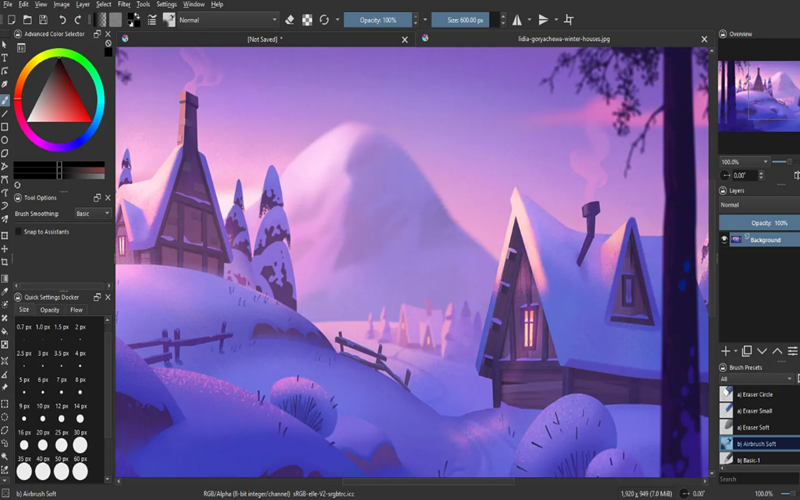
Krita is a proven, dependable open-source graphic design platform that costs nothing. This general-purpose software doesn’t require a subscription or limit you to a trial. You just head to the official website, download the software, and start creating with its flexible interface.
Compatible with: Krita works across Windows, macOS, Linux, and Android tablets.
What Is Krita Best Suited For?
Digital Painting & Drawing – Krita is a highly recommended platform for tailored painting and drawing. With over 100 built-in brushes, 9 exclusive brush engines, and multiple stabilization options, Krita makes it easy to bring your ideas to life from scratch.
Digital Illustrations – This free design tool is also known as a powerful digital illustration tool for professionals. You can use its versatile brushes, tailored workspace, and drag-and-drop tools to sketch characters, create landscapes, polish artwork, and more.
Manga, 2D animation & Filmmaking – Whether you are creating a film, designing a game, or working on manga and comics, Krita offers a versatile set of tools to get the job done. For film and 2D animation, it provides 1k+ frames, onion skins, audio support, drawing assistants, animation timelines, and curves. It also includes built-in vector tools, SVG support, and filters for manga and comics.
Seamless Customization & Productivity – Krita uses 30 docker units for smooth customization. For color management, it supports LCMS with ICC profiles and OpenColorIO for EXR workflows. With enhanced OpenGL and Direct3D GPU support, Python scripting, and HDR painting, this software gives designers a smooth and productive creative workflow.
Who Is Krita Best For?
Krita is an ideal choice for beginners and students who want to learn visual storytelling, illustration, and digital drawing without paying for commercial software.
If you are a professional comic or manga artist, illustrator, or game designer, Krita has the tools you need to bring your ideas to life, especially if you are on a budget.
This open-source, free-to-use software is also great for novice 2D animators because of its animation-ready workspace.
Where Does Krita Fall Short?
If you mainly design logos, business cards, brochures, presentations, or social media templates, Krita may be less suitable. For these tasks, you can turn to a dedicated design tool like Canva or Adobe. Limited photo-editing workflow, vector tools, and a steep learning curve are also major drawbacks of using Krita.
2. Canva
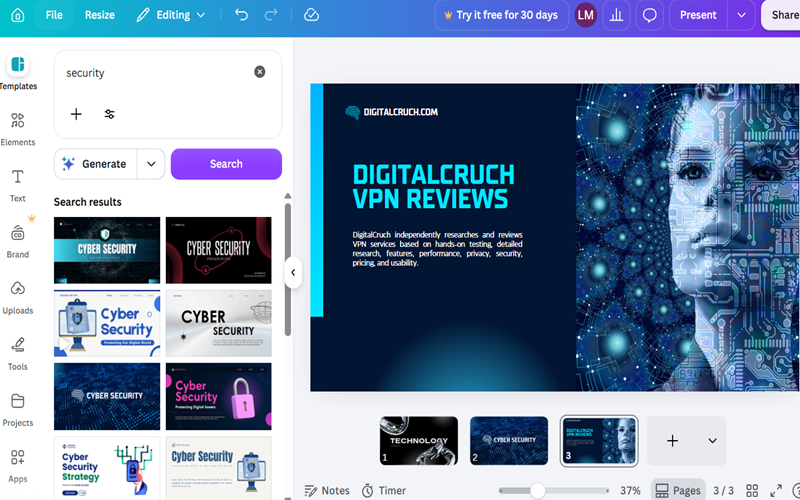
You might think our list is all about fancy, advanced tools that are difficult to master. However, we have included plenty of beginner-friendly options too, and Canva is one of them. Canva is certainly one of the most versatile free online design tools available today. Canva’s Free plan lets you use 1.6 million templates, 1 brand kit, 5 GB of cloud storage, and 4.7 million videos, graphics, audio, and photos.
Individuals and freelancers can get Canva Pro for $144 a year, while businesses pay $250 per person annually for the Business plan.
Compatible with: Windows 10+, macOS, Android, iOS/iPadOS, Chromebook, and modern web browsers. Since Canva is browser-based, you can start designing without installing anything. You can simply sign up, open the editor, and get to work. Desktop apps are also available for Windows and Mac.
What Is Canva Best Suited For?
Logo & Branding Designs – A well-designed logo helps people recognize your business. If you need a free online logo maker, Canva is worth considering. With over 1 million logo templates for everything from Shopify sites to YouTube channels, it lets you design a unique logo in seconds. It also offers 20k brand templates for social media posts, flyers, brochures, ads, etc.
Photo & Video Editing – Canva is an easy-to-use AI-powered photo and video editor. For photo editing, it lets you remove any object with Magic Eraser, add a background with BG Generator, and offers tons of filters, effects, and magic edits. This drag-and-drop editor also lets you enhance YouTube, TikTok, Instagram, and Facebook videos with captions, transitions, and animated effects. It also offers a library of 6.9+ million free music and video templates.
Invitations & Event Designs – Whether you need a printable invitation for a birthday or wedding, or an online card, Canva has plenty of options. Indeed, Canva is one of the best free invitation maker tools with over 20k templates. Canva also offers hundreds of customizable RSVP card designs to choose from.
Presentations & Visual Content – Canva is also a no-cost choice for creating a pitch deck, an educational presentation or business-centric slides. You don’t only find thousands of free readymade layouts here but can also collaborate with teams in real-time. Canva is also known for its tools for creating charts, infographics, reports, and educational materials.
Who Is Canva Best For?
Canva is a great fit for students and beginners who want to create presentations, assignments, infographics, posters, and school projects without prior experience.
Social media creators, bloggers, vloggers and freelancers also love Canva for creating thumbnails, cover images, stories, and videos.
The use of Canva is also common among small to mid-sized businesses and marketing agencies for multiple tasks.
Where Canva Falls Short?
Canva offers a simple approach to design, but professional users may outgrow it when their projects demand deeper control and advanced features. Its limited vector design tools and free-plan restrictions are notable drawbacks.
3. GIMP
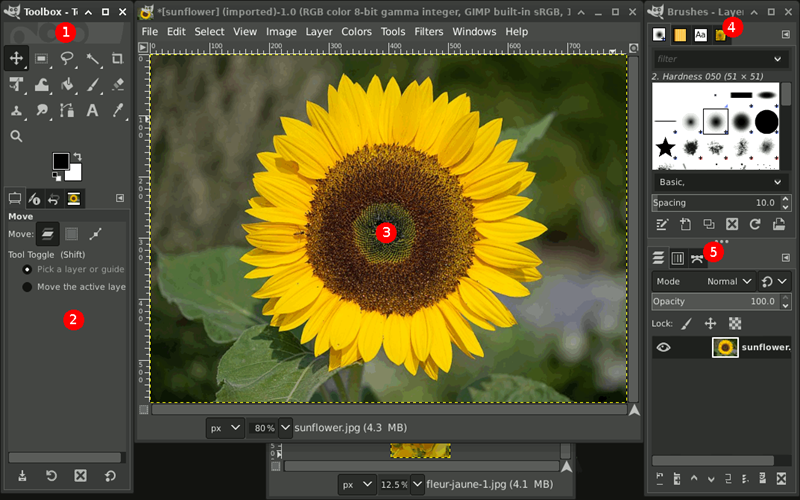
If you need a free, open-source Photoshop alternative with advanced photo editing tools, GIMP is a great option. This versatile design tool combines powerful features for digital illustration, image editing, photo retouching, and graphic design.
Compatibility: This no-cost software supports macOS, Windows, and Linux.
What Is GIMP Best Suited For?
Photo Manipulation – Top-notch photo manipulation is the main feature of GIMP. Like Adobe Photoshop, it includes layers that let you freely place text, objects, images, and effects. Similarly, it provides Clone and Heal tools to retouch photos smartly. In addition, GIMP’s support for programming languages like C, Python, Scheme, C++, etc., for photo manipulation also sets it apart from rivals.
Original Artwork – GIMP is not just a photo editing tool; it also supports original art features. Yes, if you want to craft digital artwork from scratch, GIMP is the option. Hereof, it provides you with tailored patterns, plugins, brushes, and filters. So you can create everything from new characters and illustrations to concept art, posters, wallpapers, and more.
Social Media & Promotional Material – Whether you want to design a YouTube thumbnail, poster, banner, or flyer, this free design tool is a great fit. Small customisations for promotional campaigns are also easy in GIMP. Yes, its layer-centric workflow lets you modify even small sections of a graphic without redesigning the entire image.
Who Is GIMP Best For?
GIMP is an ideal choice for freelance designers and beginners who want a full-featured design and photo editing tool without a subscription.
Professional photographers can also use GIMP for color correction, background removal, photo retouching, and image enhancement.
GIMP is ideal for users and small businesses seeking a free alternative to Adobe Photoshop and other paid design tools. As software costs continue to rise, this GNU program comes without licensing fees.
What Are GIMP’s Limitations?
Although GIMP is a powerful free editor, its steeper learning curve is its major drawback. Some users may find it less intuitive than Photoshop. It also offers fewer advanced features, integrations, and cloud collaboration options, and its vector design and professional CMYK printing capabilities are limited.
4. Inkscape
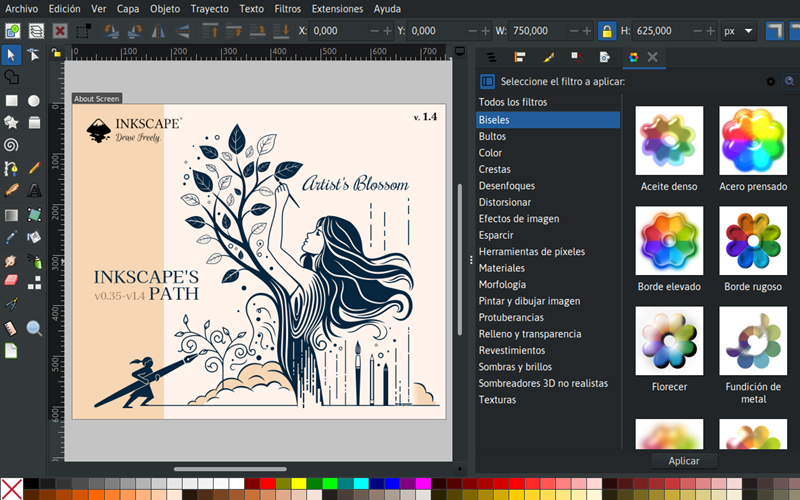
Inkscape is one of the best vector graphics tools on our list, and you can use it without a subscription or commercial licensing fees. Its strong community support and easy access to learning resources make Inkscape an ideal free design tool for everyone from web designers to digital illustrators.
Compatibility: Inkscape is compatible with macOS, Windows and Linux systems.
What Is Inkscape Best Suited For?
Logo & Brand Design – Inkscape is a powerful tool for creating extensive logo and brand designs because of its vector-graphics capabilities. Node editing and Bézier tools play a key role in crafting tailored symbols and logos. Its SVG support also makes it an excellent choice for digital and print designs, as graphics stay sharp when resized.
Vector Illustration – From manga and comic series to posters, book covers, and cartoon characters, you can create a wide range of artwork with ease. Yes, Inkscape is a great fit for decorative graphics and illustrations, with tools such as shapes, the Pen tool, gradients, path operations, brushes, and strokes.
Printable Designs & Diagrams – Inkscape supports a wide range of print projects, from posters and flyers to business cards and brochures. It also helps you create structured visuals, including maps, flowcharts, technical illustrations, and infographics.
Who Should Use Inkscape?
Inkscape is a great option for beginners, illustrators, and professionals who want free, open-source vector design software. You can also consider it a no-cost alternative to Adobe Illustrator.
Freelance artists and small businesses can also use Inkscape to create digital and printable branding materials.
Where Inkscape Falls Short?
Inkscape is mainly a vector design tool, so it is not ideal for advanced photo editing or pixel-based image manipulation. Designers familiar with Adobe Illustrator may also need some time to adapt to its interface and workflow.
5. Adobe Express
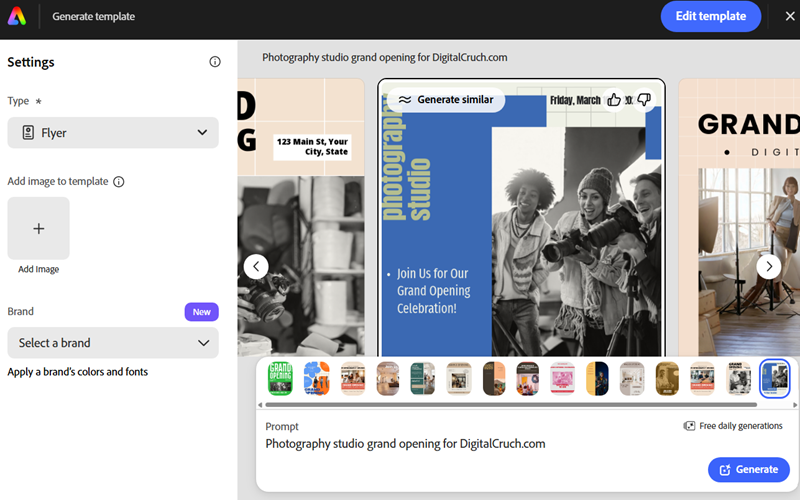
Adobe Express is another strong option on our list, offering over 100,000 video and static templates, 4,000 fonts, and 1 million royalty-free creative assets. This web-based content creation and design tool lets you create branding materials and edit photos within seconds.
Adobe Express Premium costs $9.99 per month and includes enhanced features and 250 generative AI credits. Adobe Express Teams costs $4.99 per license per month for the first year.
Compatibility: Express is a free, online design tool. You can access Adobe Express through desktop browsers or mobile devices.
What Is Adobe Express Best Suited For?
Social Media Graphics – Adobe Express works well for social media content across Instagram, Facebook, X, LinkedIn, Pinterest, and other platforms. You can employ tailored templates to create posts, stories, covers, banners, ads, and promotional graphics. It also works as a basic video editing tool for creating short-form and promotional videos.
Logo and Branding Design – This free design program is renowned for swift logo design. With a free library of around 9,000 logo templates, Adobe Express lets you create logos for Twitch, YouTube, clothing brands, businesses, food brands, real estate, and more in seconds. Beyond logos, Adobe Express helps startups and businesses design flyers, brochures, business cards, and ads using consistent brand colours and customizable elements.
Quick Photo & Video Editing – Adobe Express is also a top choice for online photo editing. With features like background removal, filters, frames, image enhancement, and AI tools, Adobe Express makes photo editing quick and easy. Similarly, Express is a reliable video editor for intro videos, Instagram, YouTube, Meta, and slideshows.
Presentations and Education Material – Adobe Express makes it easier for students, educators, and professionals to design presentations, infographics, educational posters, and classroom materials. It offers ready-to-use templates, making it easy to arrange information without designing every element from scratch.
Who Should Use Adobe Express?
Adobe Express is an ideal online tool for small businesses, startups, and marketing teams to manage everything from branding to advertising.
Students, educators, content creators, and beginners can also employ Adobe Express for everyday tasks, from creating assignments and presentations to designing social media graphics.
Where Adobe Express Falls Short?
Adobe Express is a beginner-friendly online design program that falls short for complex tasks that require advanced editing and more control. Professionals working on complex editing, detailed artwork, advanced typography, or specialized print projects may find Adobe Express too limited.
Final Words
After reviewing five different free graphic design tools, DigitalCruch’s team believes the right choice depends on your specific design needs. If your focus is digital painting and illustration, Krita is a suitable choice. For photo editing, retouching, and image manipulation, GIMP is a better fit.
Similarly, Canva and Adobe Express simplify creating social media posts, marketing materials, presentations, and other designs with pre-installed templates. Inkscape, meanwhile, is well suited for vector graphics, logos, illustrations, and scalable designs. In short, each tool caters to different design needs. So, no single option works for every designer. When choosing the right free graphic design software, consider your project requirements, budget, and licensing needs.