

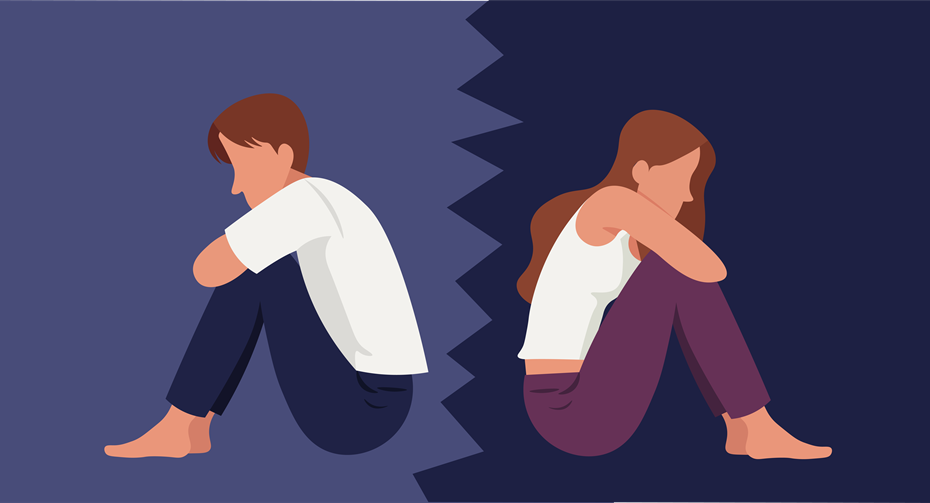
Breakups hurt in a way that is hard to explain to someone who is not going through one. The mind replays memories on a loop. Sleep gets thin. Even simple tasks like grocery shopping feel heavy because everything reminds you of the person who is gone. This is not weakness. It is a normal response to losing an attachment that once felt central to your life. It is also why so many people now turn to breakup recovery apps for structure and support during this stretch.
The numbers back this up. In the United States, close to 45% of marriages are expected to end in divorce, and about 60% of people go through at least one breakup before they turn 30. Roughly 70% of unmarried relationships in the US end within five years, based on Stanford’s How Couples Meet study. Recovery is not instant either. Research published in the Journal of Positive Psychology identifies 11 weeks as a common marker for feeling noticeably better, though this varies widely from person to person.
The picture looks similar outside the US. In England and Wales, the Office for National Statistics recorded 102,678 divorces in 2023, with about 42% of marriages projected to end in divorce. Canada’s divorce rate has actually dropped to its lowest point in 50 years, but that number hides a bigger trend: fewer people are marrying in the first place, and common-law separations do not show up in any divorce count. Australia sees roughly one divorce for every 1.4 marriages registered, with the median marriage lasting 13 years before it ends. Germany’s divorce rate sits close to 29%, down from higher levels two decades ago. France mirrors this general European decline, with cohabitation and later marriage reshaping how relationships end.
What stays constant across all these countries is the emotional cost. Studies on rejection show it activates some of the same brain regions as physical pain. Cyberstalking an ex’s social media is linked to slower healing. Holidays make it worse too. December and January see a spike in breakups, which piles heartbreak on top of a season that already asks a lot of people emotionally.
This is exactly where breakup recovery apps have found their place. They will not replace a friend’s hug or a therapist’s trained ear, but they give you something to do at 2 a.m. when the apartment feels too quiet. Below is a detailed, unbiased look at eight apps and companion tools that people around the world use to get through a breakup, along with what each does best, who it suits, and how much it costs.
A few pricing notes before we start:
- Prices below are shown in USD as listed by each provider, since most of these apps set global pricing in USD even for users in the UK, Canada, Germany, France, and Australia. Local app stores may show a converted price.
- Several apps offer a free tier or trial. Test that first before paying for a full year.
- Therapy platforms like BetterHelp and Talkspace cost far more than self-help apps, because you are paying for a licensed professional’s time, not just software.
8 Best Breakup Recovery Apps That Give You Emotional Support
Let’s explore the leading apps that can help you recover through a breakup:
1. Mend
Best for Structured Emotional Healing Programs
Elle Huerta built Mend after her own breakup, and it grew out of a newsletter into a full self-care platform. It focuses squarely on the emotional side of a split rather than trying to get you back into dating.
The app offers audio training that functions like short podcast episodes, each built around a specific part of the healing process. There are guided journaling, mood logging, and a progress tracker that count the days since your breakup and your last contact with an ex. Premium subscribers also get access to a private Mend community on Slack, where people going through similar situations can talk with one another.
Mend suits people who like a slower, more reflective style of healing. The audio lessons feel like sitting with a calm friend rather than a productivity app. It works well for someone who wants structure but does not want to talk to a chatbot or a stranger yet.
Mend’s current U.S. pricing is $39.99/year, following a 3-day free trial.
2. Break-Up Boss
Best for Quick, Practical Advice and Daily Encouragement
Relationship writer Zoë Foster Blake created Break-Up Boss and reads like a pocket-sized self-help book. It leans on humour and directness rather than long reflection exercises.
The app gives daily SOS quotes for moments when you feel the urge to text your ex. Its Feel Wheel lets you tap the emotion you are feeling right now and get advice tailored to that specific feeling. One of its more inventive tools lets you write a message to your ex without actually sending it, giving you a place to vent without blowing up your progress the next morning.
This app suits people who want fast relief rather than a long program. It is not therapy and does not pretend to be. Think of it as a witty friend who keeps your phone from becoming a weapon against your own healing.
Break-Up Boss is a paid app with a one-time purchase and no ongoing subscription. Pricing varies by region; it is currently listed at $2.99 in the U.S. App Store, while some markets list it at $5.99.
3. Rx Breakup
Best for a Structured 30-Day Plan
Rx Breakup was built by therapist Jane Reardon and stylist Jeanine Lobell as a daily program to walk you through the first month after a split. Each day unlocks a new task designed to keep your mind occupied and your habits healthy.
The app avoids the “your ex was terrible” tone that some breakup content leans on. Instead, it asks you early on to list the people you can lean on for support, which keeps you connected to real humans rather than isolating with the app. Daily prompts nudge you toward self-reflection on what went wrong and what you want to do differently next time.
Rx Breakup works well for people who like a clear finish line. Thirty days is a manageable commitment, and having a defined endpoint can feel less overwhelming than an open-ended healing journey.
Rx Breakup is free to download on iOS and Android.
4. No Contact Rule
Best for Staying Away From Your Ex
Staying away from an ex is one of the hardest parts of a breakup, and this small app is built entirely around that one goal. It supports the well-known “30-day no contact” approach that many therapists recommend as a way to stop the on-again, off-again cycle that research links to worse long-term outcomes.
The app helps you fill your daily schedule with activities so you are less likely to reach for your phone out of boredom. It sends daily reminders, motivational quotes, and prompts, and it lets you track your streak and jot down notes about how each day went.
This tool fits people who know exactly what is holding them back: the temptation to text, call, or check social media. If discipline around contact is your biggest struggle, a dedicated tracker like this can work better than a broader wellness app, since it gives you one job and does it well.
No Contact Rule costs a one-time fee of $0.99 on iOS.
5. Breakup Buddy
Best for Tracking Progress Over the First 28 Days
Breakup Buddy focuses on the first month after a split, treating it as the hardest and most important stretch to get through. It combines an AI chatbot with structured exercises drawn from Cognitive Behavioural Therapy.
This app’s healing tracker shows your progress visually. That can be motivating on days when it feels like nothing is improving. Its 24/7 AI chat support means you always have somewhere to type out a spiralling thought at 3 a.m. Also, over 20 healing exercises are designed to identify and challenge the negative thought patterns that often follow a breakup.
Breakup Buddy suits people who like data and visible milestones. Watching a tracker fill in day by day can turn an abstract healing process into something that feels concrete and achievable.
Breakup Buddy offers premium access through in-app purchases. In the U.S. App Store, Breakup Buddy Pro is currently listed at $17.99 and $42.99 for its available subscription options. Additional tokens can be purchased for $7.99. Pricing and trial availability may vary by platform and region.
6. BetterHelp
Best for Talking to a Licensed Therapist Without Insurance
BetterHelp connects you with a real, licensed therapist through messaging, phone, or video calls. It is not designed specifically for breakups, but heartbreak is one of the most common reasons people sign up for online therapy in the first place.
Once you complete an intake questionnaire, BetterHelp matches you with a therapist based on your needs and preferences. You get unlimited messaging with that therapist plus a live session each week. If a match does not feel right, switching therapists is free and simple.
BetterHelp fits people whose grief feels bigger than an app can hold, whether that means depression symptoms, panic attacks, or a breakup tangled up with other life stress. It does not take insurance in most cases, but it offers financial aid that can lower the price for people who qualify.
BetterHelp costs approximately $70 to $100 per week in the U.S., billed weekly or every four weeks, which works out to roughly $280 to $400 per month. Pricing varies based on factors such as location, therapist availability, preferences, and applicable discounts or promotions.
7. Talkspace
Best for Insurance-Backed Online Therapy
Talkspace works similarly to BetterHelp but stands out for accepting most major insurance plans, along with Medicare Part B in the US. For people with coverage, Talkspace can be far cheaper than any self-pay platform.
The app offers three tiers: messaging-only therapy, messaging plus one live session a week, and a top tier that adds live group workshops. Talkspace also offers psychiatry services for medication management, which BetterHelp does not.
This app is the better pick if your insurance plan covers online therapy or if you want the option to add medication support down the line. Without insurance, expect to pay close to what BetterHelp charges; with insurance, a typical copay runs $15 to $30 per session.
Talkspace costs $69 to $109 a week without insurance ($276 to $436 a month), or a copay of roughly $15 to $30 per session with an accepted insurance plan.
8. Wysa
Best for Anonymous AI Chat Support
Wysa is an AI chatbot built around Cognitive Behavioural Therapy, and it holds an FDA Breakthrough Device designation in the US, a marker that reflects clinical interest in its approach. It does not require you to create an account with your real name, which appeals to people who want to talk without feeling watched.
The free version gives you access to the AI “penguin” coach and one exercise per module. Premium unlocks the full self-help library, including tools for anxiety, low mood, and sleep, all of which overlap heavily with breakup-related stress. Wysa also offers optional text-based coaching with a real, trained coach for an added cost per session.
Wysa suits people who are not ready to talk to a human yet but still want more structure than a plain journaling app. It also works well late at night, since the chatbot is always available and does not need you to book a slot.
Wysa offers a free version with its AI coach and some self-help tools. Premium Self-Care costs $74.99 per year in the U.S., with a 7-day free trial. Human coaching is available separately, starting at around $19.99 per session, with pricing varying by plan and location.
Other Apps Worth a Mention
The eight apps above cover the main categories, but a few general wellness apps often come up in breakup recovery conversations and deserve a brief note.
Calm is a meditation and sleep app, not a breakup app, but its Sleep Stories and breathing exercises help with the racing thoughts and poor sleep that often follow a split. It costs $69.99 a year or $16.99 a month, with a family plan at $99.99 a year for up to six people.
Headspace takes a more structured, course-based approach to mindfulness compared to Calm’s ambient style. It is priced the same as Calm at $69.99 a year or $12.99 a month, with a cheaper student rate of $9.99 a year.
Finch turns self-care into a game by having you care for a virtual bird that grows as you complete small wellness tasks. This light, gamified approach can help on days when a breakup makes it hard to do anything productive. The core app is free, with premium features priced around $50 a year.
Daylio is a mood and habit tracker that takes under a minute a day to use. You tap your mood and the activities you did, and over weeks the app shows you which habits line up with better or worse moods, which can be genuinely useful data during a breakup. Daylio is free, with a premium tier priced at around $4.99 per month.
Youper combines mood tracking with AI-guided CBT conversations and has research backing from Stanford on reducing anxiety symptoms. It costs $69.99 a year after a 7-day free trial.
Comparison of the Best Breakup Recovery Apps in 2026
| App | Best For | Platforms | Free Option | Starting Price |
|---|---|---|---|---|
| Mend | Guided emotional healing programs | iOS, Web | Free articles and podcasts | $12.49/month (annual plan) |
| Break-Up Boss | Quick daily advice and encouragement | iOS, Android | No | $5.99 one-time |
| Rx Breakup | Structured 30-day recovery plan | iOS, Android | Yes, fully free | Free |
| No Contact Rule | Staying away from your ex | iOS | No | $0.99 one-time |
| Breakup Buddy | Tracking progress in the first 28 days | iOS | 3-day free trial | $12/month (6-month plan) |
| BetterHelp | Licensed therapy without insurance | iOS, Android, Web | No, but financial aid available | $65-$100/week |
| Talkspace | Insurance-backed online therapy | iOS, Android, Web | No | $69/week (or copay with insurance) |
| Wysa | Anonymous AI chat support | iOS, Android, Web | Yes, core AI coach free | $75/year (premium) |
Tips for Choosing the Right App for You
Match the App to Your Stage of Grief
Someone one week out from a breakup usually needs distraction and structure, which fits apps like Rx Breakup or No Contact Rule. Someone three months out, still stuck on identity questions and self-worth. Hereof, you may get more from Mend’s audio courses or a licensed therapist through BetterHelp or Talkspace. There is no single right app because grief itself is not a straight line.
Watch for Signs You Need More Than an App
If you notice persistent thoughts of self-harm, an inability to work or eat for weeks, reach out for professional help. A breakup can trigger depression that feels unmanageable, and an app is not enough on its own. This is the point to reach out to a licensed therapist or a crisis line in your country, in addition to anything else you try.
Do Not Stack Too Many Apps at Once
It is tempting to download five apps in one weekend after a breakup. Most people get more out of picking one or two tools and sticking with them for a few weeks than jumping between apps every few days. Consistency matters more than variety here.
Consider Cost Over Time, Not Just the Sticker Price
A one-time $5.99 purchase like Break-Up Boss is a low-risk way to test whether app-based support even suits you. Subscription apps like BetterHelp add up fast, so check if your employer offers an Employee Assistance Program. This offer includes free therapy sessions before paying out of pocket.
Use Free Trials Before Committing to a Year
Nearly every app on this list offers a free trial or a free tier. Test the app’s tone and style for a few days. A chatbot that feels comforting to one person can feel cold and repetitive to another.
FAQs
Do breakup recovery apps actually work?
They can help with structure, distraction, and small daily habits, and some users report real benefit from journaling prompts and no-contact tracking. Although recovery apps are not a replacement for therapy when grief is severe or prolonged. No app has the same clinical evidence base as talking to a licensed mental health professional.
Are these apps available outside the United States?
Most of them are. Apps like Mend, Wysa, Calm, Headspace, BetterHelp, and Talkspace are available in the UK, Canada, Australia, Germany, and France through the Apple App Store and Google Play. Insurance coverage for Talkspace mostly applies to US-based plans, so users in other countries should expect to pay the cash price.
How long does it usually take to get over a breakup?
Research suggests an average of around 11 weeks for many people to feel noticeably better after a shorter relationship, though this varies widely based on relationship length, whether there was infidelity, and individual circumstances. Longer marriages and relationships involving children typically take longer to process.
Is it normal to still think about my ex after months of no contact?
Yes. Attachment does not disappear on a fixed schedule. Occasional thoughts, especially around anniversaries or shared memories, are common even a year or more after a breakup. What matters more is whether those thoughts are shrinking in intensity and frequency over time.
Should I use a free app or pay for therapy?
This depends on the severity of what you are feeling and your budget. Free or low-cost apps work well for general support, structure, and staying occupied. If you notice signs of depression, anxiety that interferes with daily life, or thoughts of self-harm, a licensed therapist through BetterHelp, Talkspace, or a local provider is the safer choice.
Final Words
Breakups are common, painful, and survivable, in that order. The statistics from the US, UK, Canada, Germany, France, and Australia all point to the same truth: ending a relationship is one of the most universal human experiences, yet it still catches almost everyone off guard with how much it hurts.
The apps on this list will not erase that pain, and none of them claims to. What they offer is a small, steady hand during a time when steadiness is hard to find on your own. Whether you need 30 days of no contact, a therapist who knows your story, or someone to listen at 3 a.m., choose what you’ll actually use. Start small, be patient with yourself, and remember that professional help is always there if the weight of it gets too heavy to carry alone.
Note: If you are having thoughts of self-harm or suicide, please reach out to a crisis line in your country right away. For the US, call or text 988. Similarly, if you are in the UK, contact Samaritans at 116 123. In Canada, call or text 988. In Australia, contact Lifeline at 13 11 14.